Interactive stories for kids: read and choose together
Interactive stories for kids let children choose what a character does next, then read the scene that follows that choice. To read one together, read a short scene aloud, offer the two options, and let your child decide before you continue. For ages 4–6, start with concrete actions; for ages 7–10, try a scene with clues they can discuss.
How do you read interactive stories for kids together?
A choose-your-path story branches when the reader makes a decision. The grown-up can handle the reading while the child chooses; your child doesn't need to read independently to take part.
- Read to the choice. Stop before revealing what either path brings.
- Say both options aloud. Use the words on the page rather than adding your own hints.
- Let your child pick. A spoken answer or a point at the picture is enough.
- Read what happens next. Notice the consequence together: “We chose the pond. Who did we meet?”
The two scenes below come from the complete free stories linked at the end. You can read these passages aloud first, then open the adventure to follow your child's choice.
Ages 4–6: offer two things the character can do
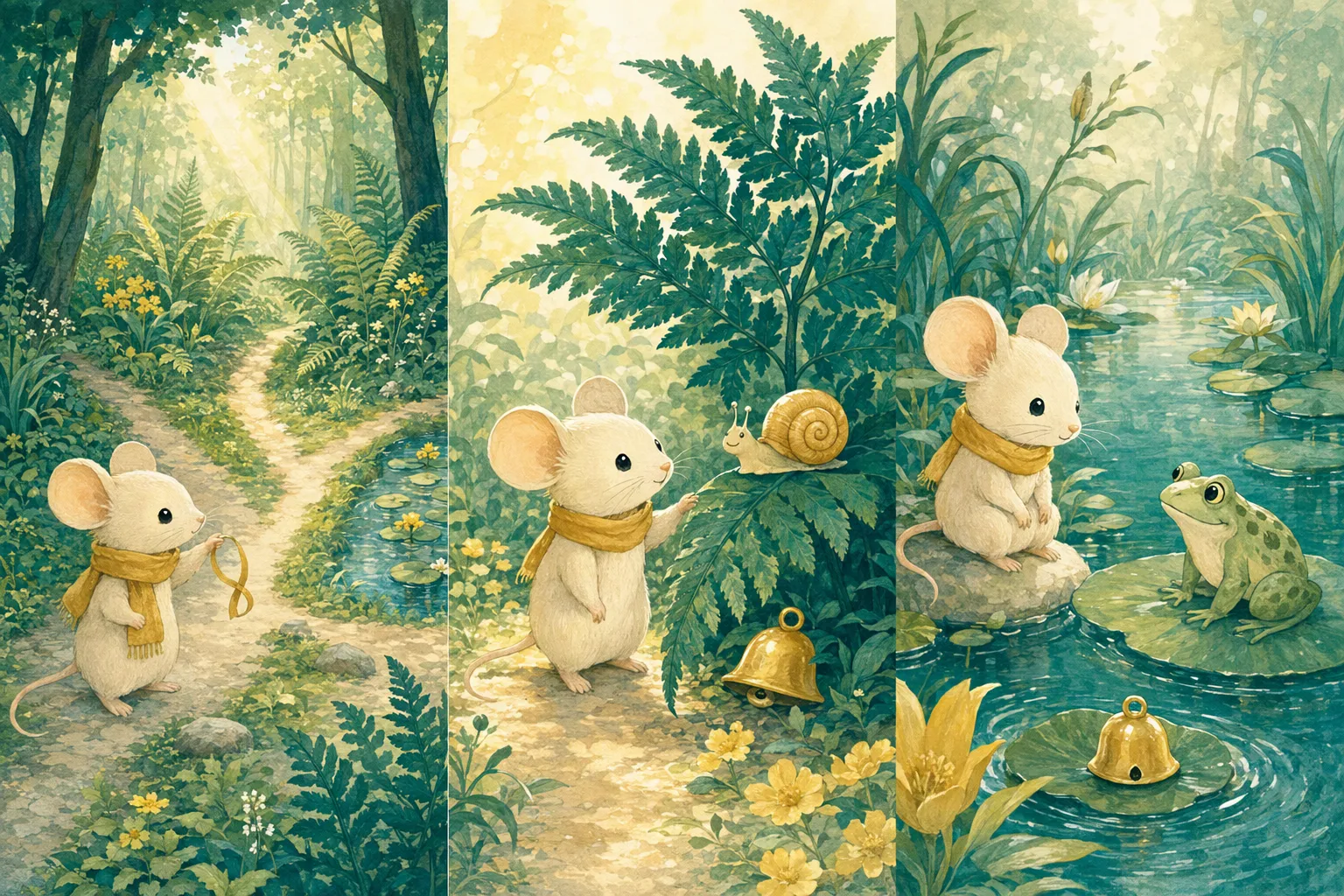
For a first shared story, choose a small problem and two easy-to-picture actions. A missing bell, some ferns and a nearby pond give a child something concrete to decide about.
Read this opening:
Pip has a bell for the forest picnic. But the bell has slipped off its ribbon!
Ting! A little sound comes from the ferns. Plip! Something splashes in the pond.
Where should Pip look?
Then offer the two choices:
- “Look under the ferns.”
- “Ask the frog at the pond.”
Pause there. If your child looks unsure, repeat the options: “Shall Pip look under the ferns, or ask Frog?” Let them point if they'd rather not say the words. You don't need to ask them to explain why.
On the fern path, Pip finds the bell with a snail and walks slowly so the new friend can join the picnic. On the pond path, Frog helps Pip reach the floating bell and hops along to the picnic. Both choices move the story forward, but they bring a different discovery and companion.
After reading the chosen scene, try one small question: “Who is coming to the picnic with Pip?” Then let the story rest, or try the other path if your child wants to.
Ages 7–10: invite a choice between two clues
For a child who enjoys wondering how details fit together, offer a clue-led scene. Keep the choice clear, but leave room for a prediction before you reveal what happens.
Read this passage:
Fern finds a map tucked into the roots of an old tree. There are no place names: just a folded leaf and a curling ripple.
A leaf like the one on the map hangs outside a hollow tree. Beyond the footbridge, circles spread across a quiet stream.
“Perhaps this map shows things people usually walk past,” Fern thinks.
The choices are:
- “Investigate the folded-leaf clue.”
- “Follow the ripples to the stream.”
Ask, “Which clue would you follow first?” If your child wants to talk, add, “What do you think we'll find there?” Listen to the prediction without steering them toward your favourite option.
Following the leaf leads Fern to a beetle filling folded leaves with golden seeds. The leaves point toward a bare hill. You can then ask, “What does that new detail make you think the map is for?” Your child can change their mind after discovering something new; they don't have to defend their first guess.
Pick the style your child enjoys, not just the age label
Use these age bands as a starting point for choosing the scene, rather than a test of what your child should manage.
| Starting point | Kind of choice | A useful parent prompt |
|---|---|---|
| Ages 4–6 | Two visible places or familiar actions | “Ferns or pond?” |
| Ages 7–10 | Two clues with something to wonder about | “Which clue would you follow first?” |
An older child may prefer the simple bell story after a busy day. A younger child may enjoy hearing the map scene with help. If either passage feels like too much, reread just the part that introduces the choice.
Keep the choice from becoming a quiz
- If your child asks which option is right: “We can choose either and see what happens.” In these stories, both options lead to another scene.
- If they choose straight away: follow the choice. You don't have to add a question before continuing.
- If two children want different paths: let one choose this time, then return to the opening for the other's turn.
- If they lose interest: stop at the choice or after its next scene. You can leave the other path for another time.
Try a free story together
Forever Soya makes illustrated, choice-led stories for shared reading: start with The Little Bell for ages 4–6, or explore The Map of Small Wonders for ages 7–10. Both complete adventures are free to read through their endings without signup or payment. Choose a path, read what happens next, and try another way.